What to Expect From a Roof Insurance Claim in Florida
A tropical system comes up the St. Johns overnight, and in the morning there are shingles in the yard on Crescent Lake and a wet spot on the bedroom ceiling. What happens next is a process with rules, deadlines and a few traps. This is how a roof claim usually goes for a homeowner in north Florida, in order, and where JM Roofing LLC fits.
Document first, before anyone touches the roof
Photos come before phone calls. Walk the property and photograph everything: shingles or panels on the ground, lifted tabs you can see from the driveway, dented gutters and downspouts, bent metal on vents, debris in the valleys, and every stain or drip inside.
Then keep the water out. Your policy expects you to prevent further damage once you know about it, and a carrier can decline to pay for water that came in while nothing was done. A tarp fastened at the ridge and buckets under the drips count. Keep every receipt. If you want us to do the tarping and the photos, roof leak repair and detection is the page for that, and Tania will get it scheduled.
Calling the insurer and the one year clock
Call the claims line or file online. Give the date of loss and describe what you can see. Do not diagnose the roof; say there was a storm, there is visible damage, and you want to open a claim.
Florida puts a deadline on this. Under Florida Statute 627.70132, notice of a new or reopened property claim has to reach the insurer within one year of the date of loss, and a supplemental claim (additional damage from the same storm, found while the repair is under way) within 18 months of the date of loss. Those windows came from Senate Bill 2-A in December 2022, which cut the old two and three year periods roughly in half. If you think a storm damaged the roof, do not wait to find out.
The adjuster visit, and why a roofer should be up there too
The insurer sends an adjuster to look at the roof, and that visit sets the scope. What is not seen on that visit is hard to add later.
Ask us to be there, to walk the roof at the same time and point out what a homeowner would not know to mention: a creased shingle that looks fine from below but has lost its seal, a cracked pipe boot, a screw line on a metal roof that backed out under wind load, a valley where the underlayment tore. Juan brings nearly 20 years of roofing experience and knows the language a scope is written in.
Reading the scope of loss
A few days to a few weeks later, the insurer sends the scope of loss: an itemized list of what the carrier agrees was damaged and what it will pay for each item. It reads like an estimate written in code. Read every line, then send it to us. We will tell you what is on it and what is missing.
Supplements when the scope misses something
Scopes miss things. Common ones here are the peel-and-stick underlayment and secondary water barrier the Florida Building Code requires, re-nailing the deck to code, and rotten decking that only shows once the old roof is off. When we find work the scope did not cover, we write a supplement: an itemized request with photos and the code citation where one applies. The insurer reviews it and decides.
Your deductible stays yours
The deductible is the part of the loss the policy does not pay. It comes out of your pocket.
Florida law is clear on the other side of that. Under Florida Statute 817.234, a contractor may not pay, waive or rebate all or part of an insurance deductible on work paid for by a property insurance policy. The state treats that as insurance fraud. The pitch usually sounds like "we'll cover your deductible" or "free roof, nothing out of pocket." What it means is that the invoice gets padded somewhere else, and the homeowner is now part of it. We do not do it, and you should end the conversation with anyone who offers.
ACV and RCV in plain words
Your scope will usually show two numbers. Replacement cost value, RCV, is what it costs to put the roof back new today. Actual cash value, ACV, is that number minus depreciation for the age and condition of the roof that was damaged.
Which one you get depends on the policy. A replacement cost policy typically pays ACV first, less the deductible, and holds back the depreciation until the work is finished and the carrier gets the completion paperwork; then the second payment releases it. An ACV-only policy pays the depreciated figure and stops, and the homeowner makes up the difference.
What JM Roofing does and does not do on a claim
We document the roof with photos and measurements. We meet the adjuster on the roof. We explain the scope, write supplements where it missed code-required work, and give you a written estimate so you can see how the numbers line up. We do the work to the Florida Building Code and give the carrier the completion paperwork it needs to release any holdback.
We do not file the claim for you, we do not negotiate with the insurer on your behalf, and we do not promise what the insurer will pay. The claim is yours. The insurer decides. If you want to check any contractor's Florida license, the DBPR site lists it; ours is RC29027900.
Choosing metal after a storm
A claim pays to put the roof back the way it was. It does not usually pay for an upgrade. But the moment the old roof is coming off is the cheapest moment to change what goes back on, because the tear-off and deck work are already in the job.
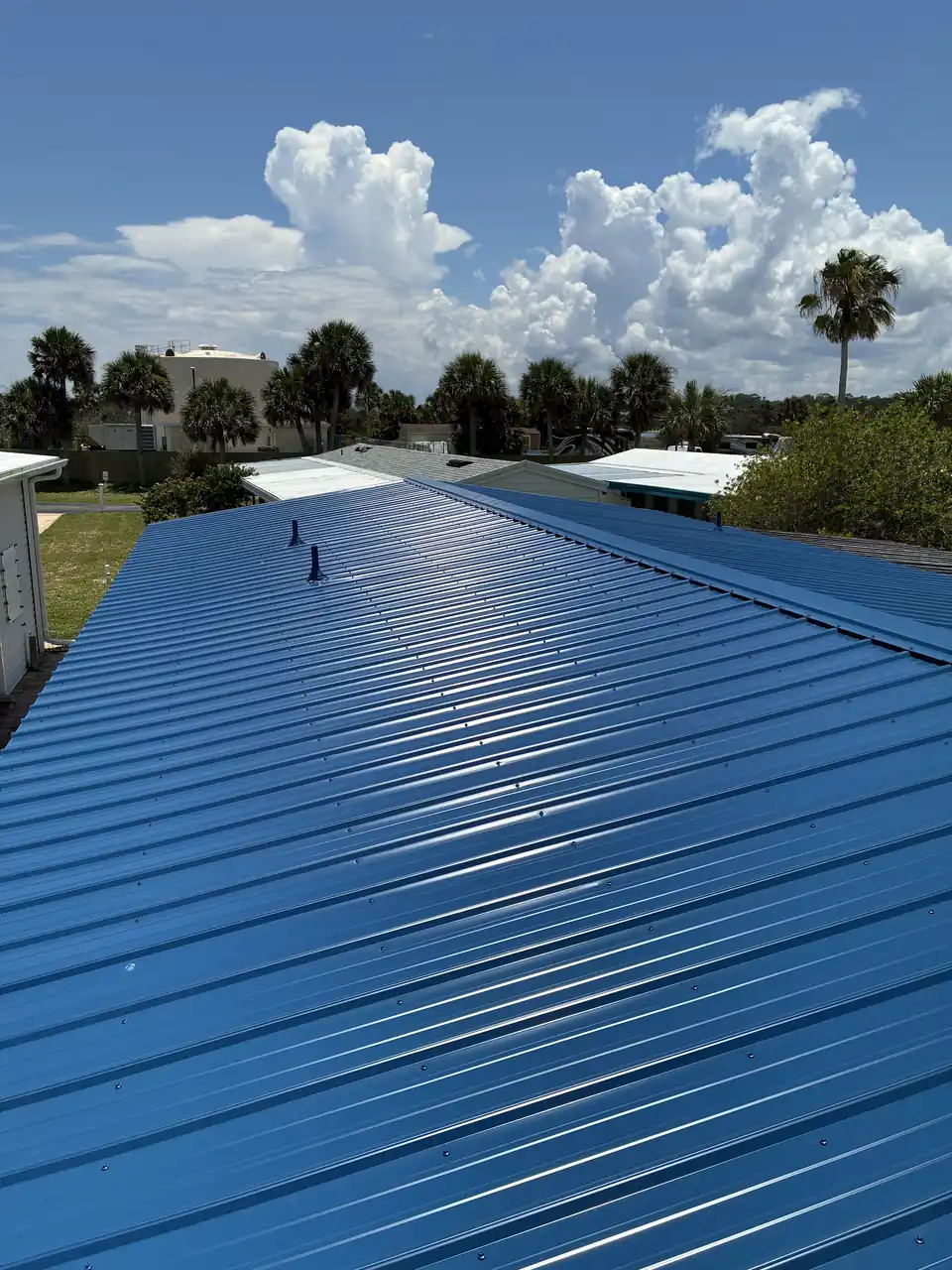
That is why a lot of our storm customers end up with a metal roof from Tri County Metals, the Florida manufacturer we install. Every panel we put on carries a Florida Product Approval in the FL 36904 family, and most also hold a Miami-Dade Notice of Acceptance, the strictest wind approval in the state. The difference between the claim payment and the metal price is the upgrade cost, and we put that number in writing. If you are staying with shingles, asphalt shingle roofing built to current code is a real step up from most 2000s roofs.
Paying for the deductible or the upgrade
The deductible on a hurricane claim can be a real sum, and an upgrade to metal is a real sum on top. JM Roofing offers financing through Regions Bank by way of EnerBank, with three plans and a prequalification that has no impact on your credit score. The plans and the full terms are on the financing page. Tania handles the paperwork.
Frequently Asked Questions
Under Florida Statute 627.70132, notice of a new or reopened claim must reach the insurer within one year of the date of loss, and a supplemental claim within 18 months of the date of loss. Those windows were shortened by Senate Bill 2-A in December 2022. Your policy may have its own reporting terms too, so report promptly. A quiet leak can run for months before it shows on a ceiling.
No. Florida Statute 817.234 prohibits a contractor from paying, waiving or rebating all or part of an insurance deductible on repairs covered by a property insurance policy, and the state treats it as insurance fraud. An offer to "take care of the deductible" means the invoice will be inflated somewhere else. JM Roofing does not do it, and we recommend you walk away from any contractor who offers.
It helps. The adjuster's visit sets the scope, and a roofer on the roof at the same time can point out creased shingles, cracked boots, backed-out screws and torn underlayment that a homeowner would not know to mention. We are there so the report reflects what is actually on the roof.
A claim generally pays to restore the roof you had, and the insurer decides what that means under your policy. Metal is usually an upgrade the homeowner pays the difference on. A storm replacement is the least expensive time to make that change, and the difference can be financed through the plans on our financing page.
Send us the storm photos
If a storm hit your roof anywhere from Palatka to Palm Coast, send the photos to jmroofingllc24@gmail.com or call JM Roofing at (386) 559-2169. We will get on the roof, document what we find, and tell you what we see. The contact page is the quickest way to reach Tania.