Storm Damage Roof Restoration in North-East and North-Central Florida
When a storm comes through Putnam County, the roof is the first thing that gets hit and the last thing that gets sorted out. JM Roofing LLC handles both halves of that: the roof itself, from a tarp to a full rebuild, and the paperwork that follows.
When a storm comes through Putnam County, the roof is the first thing that gets hit and the last thing that gets sorted out. JM Roofing LLC handles both halves of that: the roof itself, from a tarp to a full rebuild, and the paperwork that follows. Juan Medina is on the roof with nearly 20 years of roofing experience, and Tania runs the office side, the photos and the calls with your adjuster. We are based in Pomona Park and work from Jacksonville down to Daytona Beach and west to Ocala and Lake City.
What Hurricanes, Tropical Storms, Wind and Hail Do to Roofs Up Here
The storms arrive here too. Irma in 2017, Ian and Nicole in 2022 and Milton in 2024 all reached this part of the state. Between the named storms, tropical storm winds lift shingles without any headline, and summer thunderstorms bring straight-line gusts and hail over Marion, Putnam and Columbia counties.
Live oaks and pines over a house in Crescent City or Satsuma drop limbs through the roof in a squall. Wind-driven rain is the quiet damage: it gets under lifted shingles and behind flashing and shows up as a ceiling stain weeks later. Our post on signs your roof leaked after a storm covers what to look for inside.
Storm Damage on Shingle Roofs Versus Metal Roofs
On an asphalt shingle roof, wind breaks the seal strip that glues each course to the one below. The tabs lift, crease where they bent, and tear off, mostly on the slopes facing the wind and on the leeward slope just past the ridge. Hail bruises the mat and knocks granules loose.
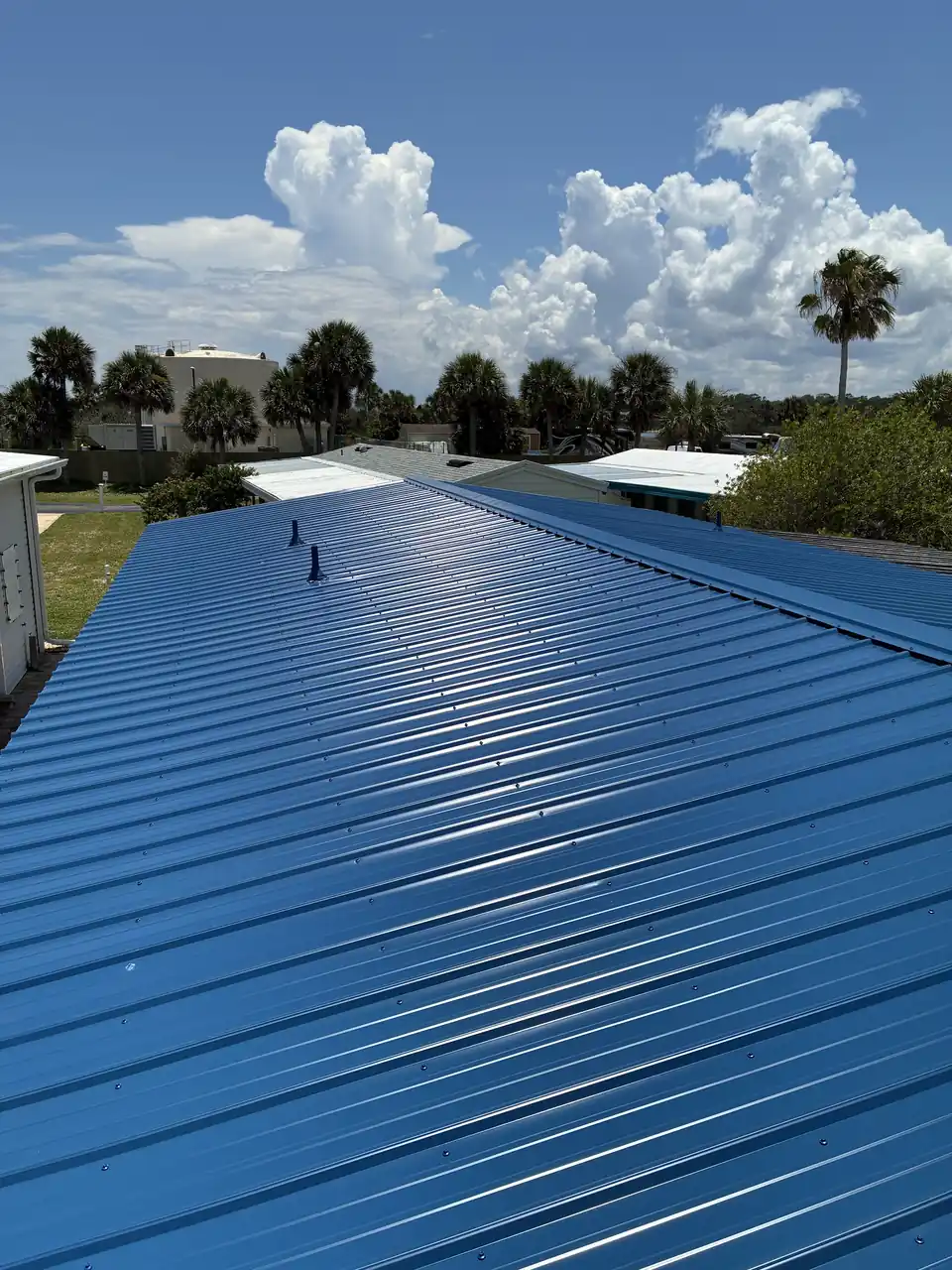
On a metal roof, exposed fastener panels loosen at the screws, and a panel that has lost enough screws lifts at the eave and peels. Large hail dents panels, mostly cosmetic but worth documenting. A standing seam roof with concealed clips rides out the same storm with far fewer problems, which is why so many houses in the region end up with metal roofing after a second storm claim.
Emergency Tarping and the First Steps After the Storm
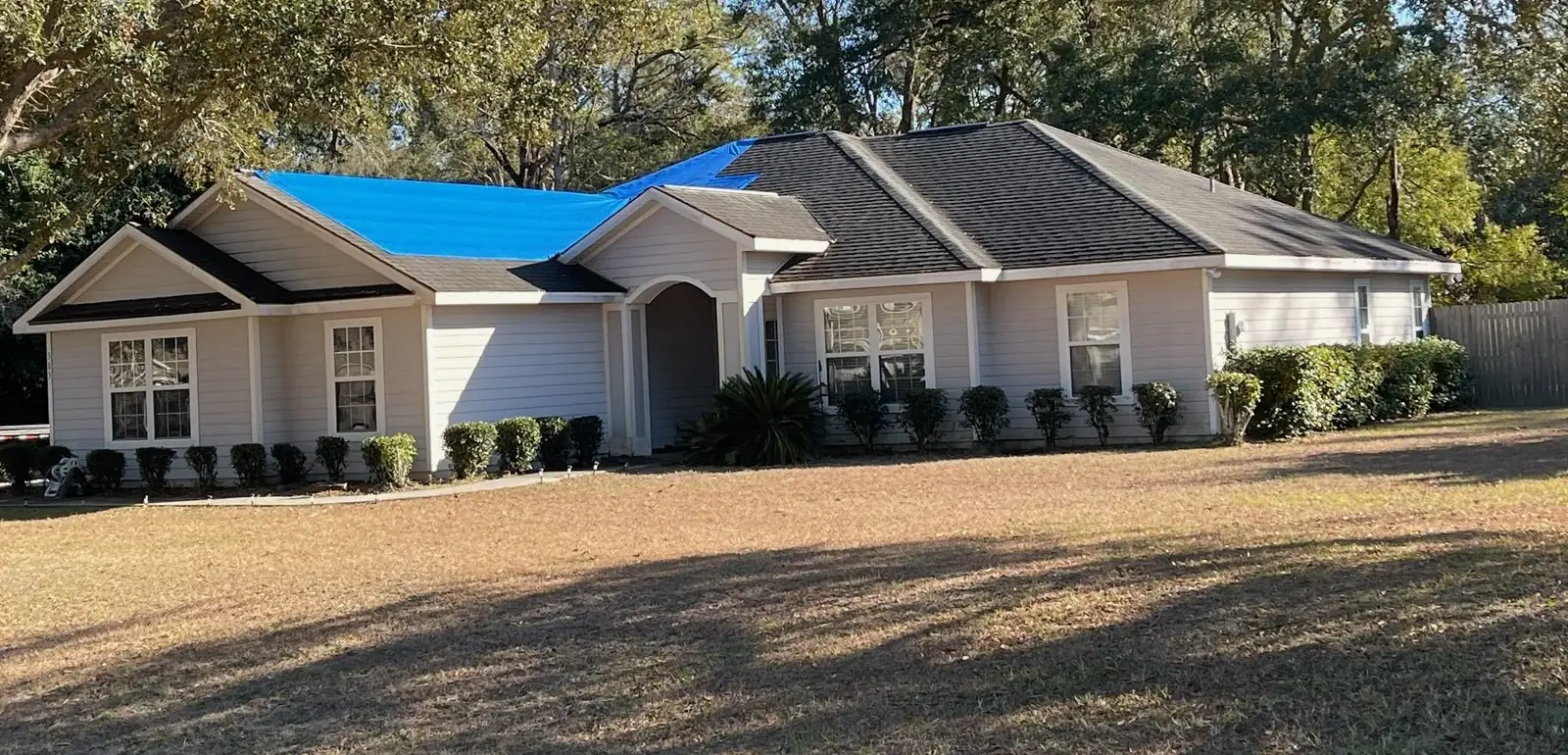
If water is coming in, the first job is to stop it: a tarp, or a dry-in with peel-and-stick underlayment over the open area. We run tarps over the ridge and hold them with battens, because a loose tarp is gone in the next gust. A tarp is a bridge, and Florida sun breaks it down within weeks.
Photograph everything you can see from the ground and every stain inside, keep the receipts for the tarp because that cost is part of the loss, and stay off the roof yourself. Call (386) 559-2169 and tell Tania what happened. We get to you as the schedule allows, and we do not promise an arrival time we cannot keep.
We Also Help With Insurance Claims. Here Is Exactly What That Means.
Here is what those words mean at JM Roofing.
We document the damage. Juan photographs every slope, every lifted shingle, dent and loose panel, and the attic underneath, with drone shots where the roof is steep or high. You get the photos and a written description, storm damage separated from old wear.
We meet the adjuster on the roof. When your insurer sets the date, we are there. The adjuster walks the roof with Juan, who points out what was found and where. It is a shared inspection, not an argument.
We explain the scope of loss, the adjuster's line-by-line list of what the insurer agrees to pay for, and say whether each line matches what is on the roof.
We write a supplement when the scope misses something: a slope the adjuster did not walk, the drip edge, the underlayment the code requires. We send it to the insurer with photos and measurements, and the insurer decides whether to revise the scope.
We do not negotiate the claim as your representative.
Florida Claim Rules Worth Knowing: Deadlines
One rule comes up on nearly every storm job.
Under Florida Statute 627.70132, as amended in December 2022, notice of a new or reopened property insurance claim has to reach the insurer within one year of the date of loss, and a supplemental claim within 18 months. A claim reported later is barred. The clock runs from the storm, not from when you noticed the stain.
The Repair or Replacement Once the Scope Is Set
When the scope is settled, the work is the same work we do on any roof. A few blown shingles on one slope is a roof repair with matched shingles and new underlayment under the patch. Damage across most of the roof is a roof replacement: tear-off to the deck, re-nailing to the Florida Building Code, peel-and-stick underlayment, new flashing, and the new covering, whether that is the asphalt shingle system the scope calls for or metal. If the roof was built under the 2007 code or later, the 25 percent rule no longer forces a full replacement when one slope needs work, and we cover that on our roof inspections page.
Coming Back Stronger: Metal After a Storm, and Paying for the Deductible
A storm claim is the one time most homeowners get to rethink the roof. If the insurer is paying to replace a shingle roof, the step up to metal is smaller than starting from zero, and a standing seam roof with concealed fasteners is the covering that has come through recent storms best on the houses we see. The panels we install come from Tri County Metals, a Florida manufacturer, and carry Florida Product Approvals in the FL 36904 family.
The upgrade cost above the scope, and the deductible itself, are the two numbers a homeowner has to cover. Regions Bank financing through EnerBank is available for either one, and Tania handles the paperwork.
Frequently Asked Questions
Most Florida policies cover sudden wind and hail damage, usually subject to a separate hurricane deductible for named storms. They generally do not cover wear, age, neglect or a roof that was already failing, and some pay actual cash value on older roofs rather than full replacement cost. Your declarations page says which you have.
Photograph everything first. Then get a documented inspection if the damage is not obvious, because a claim for old wear helps nobody. If shingles are on the lawn or water is coming in, stop the water with a tarp, keep the receipt, and report the loss to your insurer promptly. The one-year notice deadline runs from the date of the storm.
That happens, and the answer is a supplement. We photograph and measure what the scope left out, such as a slope that was not walked, the drip edge or the underlayment, and send it to the insurer with a written explanation. The insurer reviews it and decides whether to revise the scope.
Under Florida Statute 627.70132, notice of a new claim must reach the insurer within one year of the date of loss, and a supplemental claim within 18 months. Later claims are barred. Your policy may have its own reporting terms as well, so read it and call your insurer early.
Metal Roofing
Metal roofing in Putnam County and North Florida. Tri County Metals 5V, standing seam and Ultra Rib panels, factory trained installer.
Learn more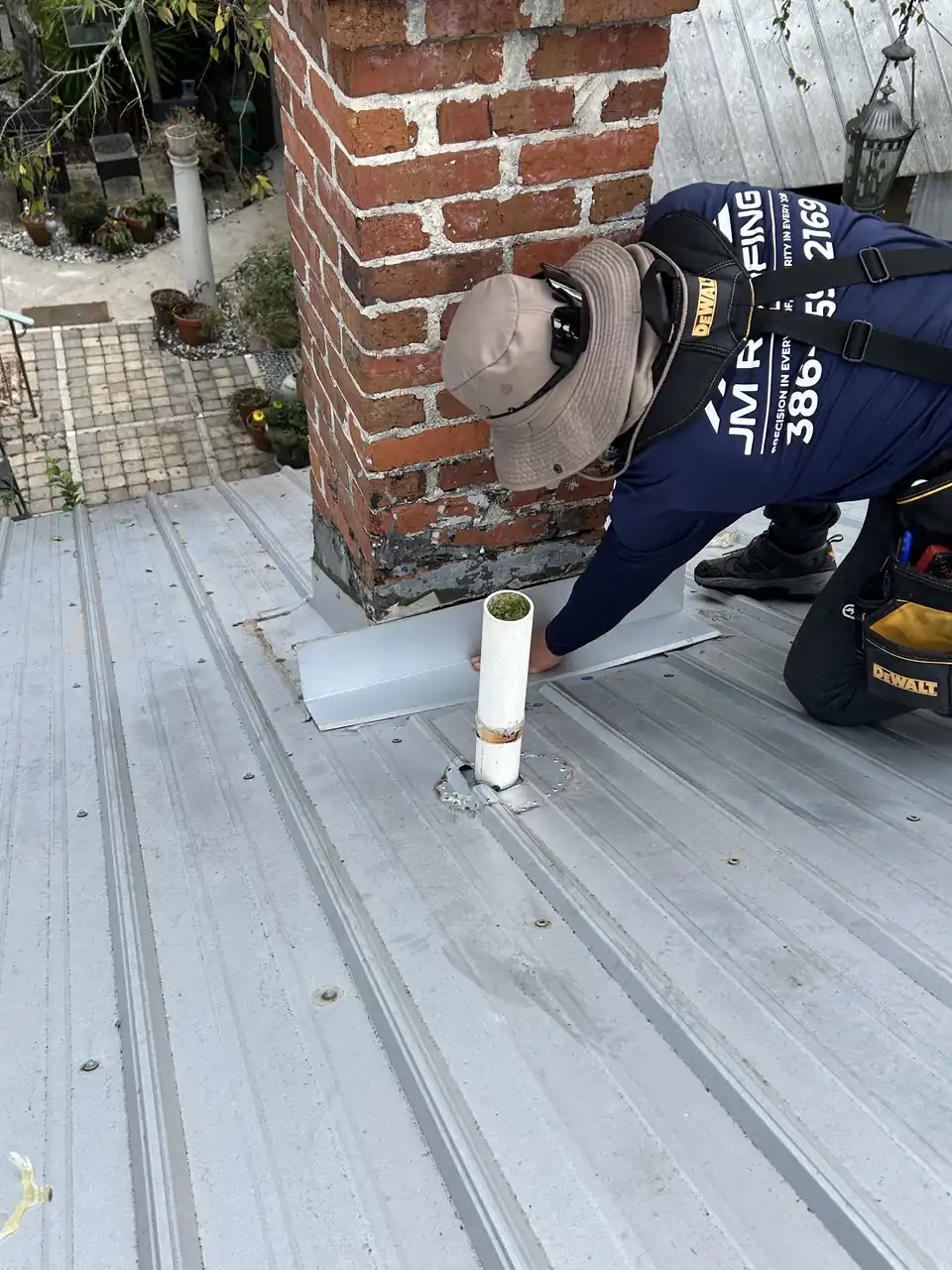
Roof Repair
Roof repair in Palatka and Putnam County FL. Wind-lifted shingles, cracked pipe boots, chimney flashing, backed-out screws on metal roofs.
Learn more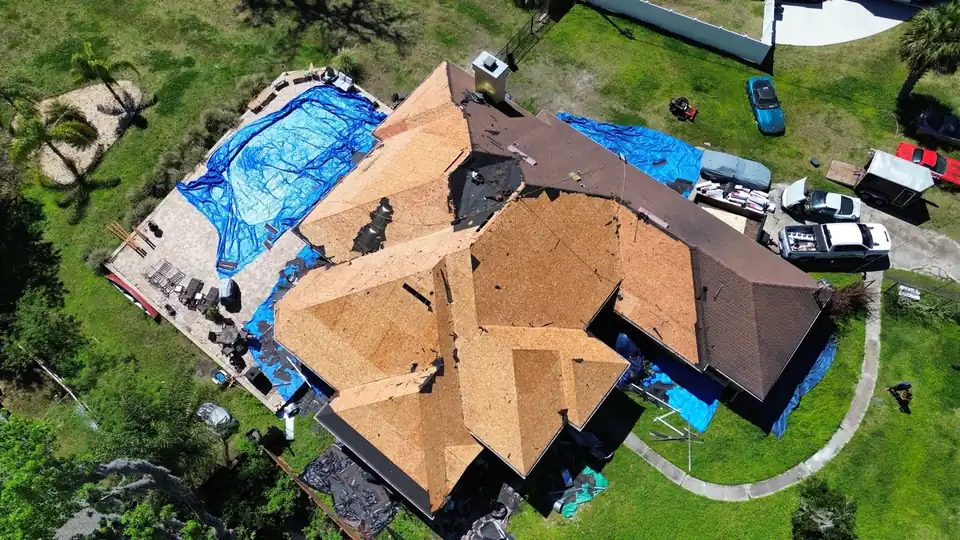
Roof Replacement
Roof replacement in Palatka, Putnam County and North Florida. Tear-off to the deck, re-nailed to code, metal or shingle, permits pulled.
Learn moreSend the Photos and Let Us Look
If a storm has been through, send us the pictures, tell Tania when it hit, and Juan will get on the roof and in the attic. You get a written assessment: a claim, a small repair, or nothing at all. Call JM Roofing at (386) 559-2169. We work the towns on our service areas page, from Pomona Park and Palatka out to the coast.