
Roof Leak Repair and Leak Detection in North-East and North-Central Florida
The stain on the ceiling is almost never under the hole in the roof. Water gets in at a pipe boot or a lifted shingle, runs down the underlayment, rides a rafter for ten feet, and drops off a nail head into the hallway.
The stain on the ceiling is almost never under the hole in the roof. Water gets in at a pipe boot or a lifted shingle, runs down the underlayment, rides a rafter for ten feet, and drops off a nail head into the hallway. JM Roofing LLC finds the place it actually gets in. Juan Medina, the owner, is the one in the attic and on the roof, with nearly 20 years of roofing experience. We are based in Pomona Park and work across Putnam County and beyond, from Palatka and Palm Coast down to DeLand and Daytona Beach.
Leak detection is a different job from a general roof repair. A repair fixes what you can see. Leak detection proves where the water comes from first, because a patch in the wrong spot is money gone and a ceiling that keeps dripping.
What to Do Right Now While the Roof Is Leaking
Get a bucket under the drip. If the ceiling drywall is bulging with water, push a screwdriver through the low point of the bulge over the bucket so it drains in one place instead of bringing the whole sheet down. If water is near a light fixture or a ceiling fan, turn that circuit off at the panel. Take a few photos while it is happening and note the weather, because a driving rain from the east and a clear cold morning point to different causes.
Then stay off the roof. A wet metal roof is as slick as a boat ramp. Call (386) 559-2169 and tell Tania what you are seeing. One homeowner wrote that Juan came out on short notice when the roof started leaking, and that is the kind of call we would rather get early than late.
Why the Drip Is Not Under the Hole: How Water Travels Through a Roof
A roof is layers: panels or shingles on top, underlayment, the plywood deck, then the rafters and the attic. Water that gets past the top layer runs downhill on the underlayment until it finds a seam, a nail or a tear, soaks into the deck, and follows the framing.
In a 1980s block house with a shallow hip roof, water from a bad boot near the ridge can show up above a window on the outside wall. In a steep-gabled frame house in Palatka, it can run a rafter and drip at the eave. Wind changes it again: a leak that only shows in a nor'easter off the Atlantic may be bone dry in a thunderstorm from the west. That is why we start with the whole path, not the stain.
How Juan Finds a Roof Leak: Attic First, Then the Roof, Then the Hose
Most leak calls start in the attic. Water leaves a trail: dark stains on the plywood, rust streaks on nail points, matted insulation, daylight where there should not be any. Juan follows the trail uphill to the highest wet point, because the entry is near there. Then he goes up top and looks at everything above and upslope of that point: boots, flashing, valleys, fasteners, seams.
When the roof is dry and nothing is obvious, we hose test. One person runs a garden hose on a small section at a time, low and slow, starting at the bottom and working up, while the other watches in the attic. When the drip starts, we know which few square feet let it in. On a steep or high roof we shoot drone photos first so every slope gets seen before anybody sets a ladder.
The Usual Leak Sources on Florida Houses
After enough attics across Putnam, Flagler, Volusia and St. Johns counties, the same suspects keep turning up.
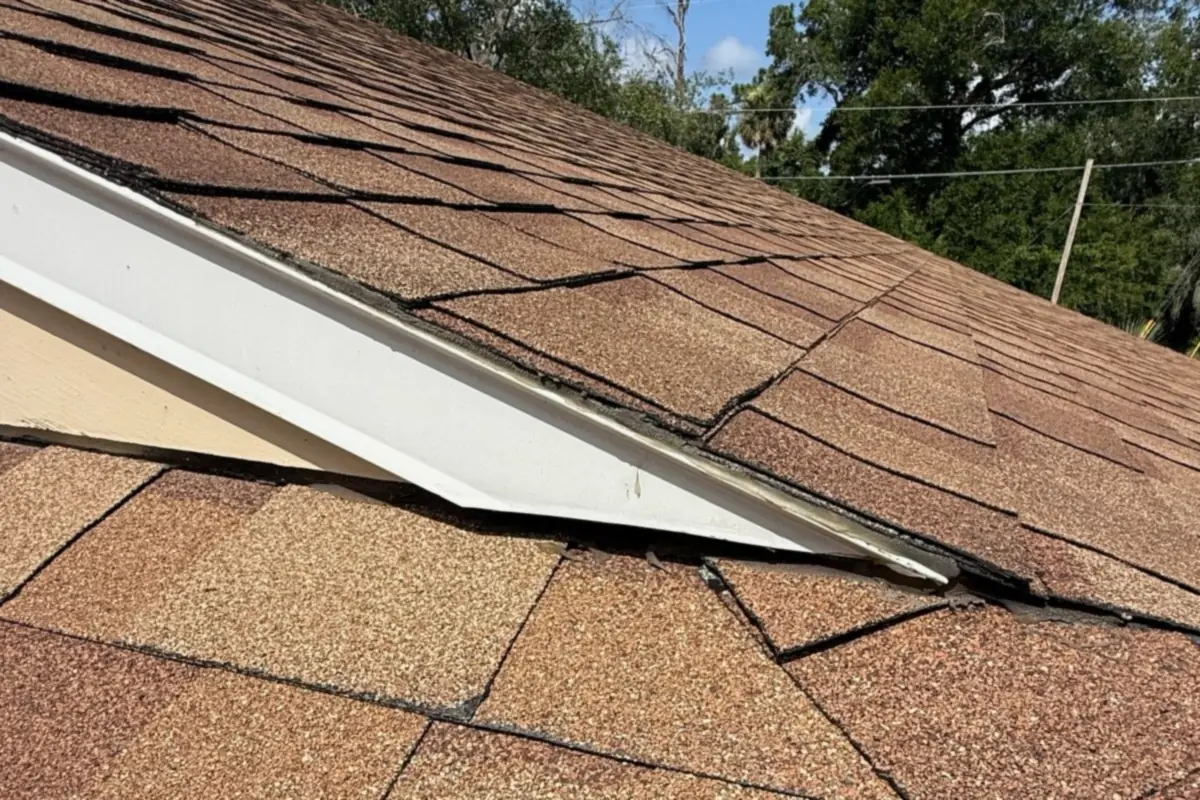
Pipe boots. The rubber collar around a plumbing vent cracks after a few years of Florida sun, and a cracked boot near the ridge can stain a ceiling on the far side of the house.
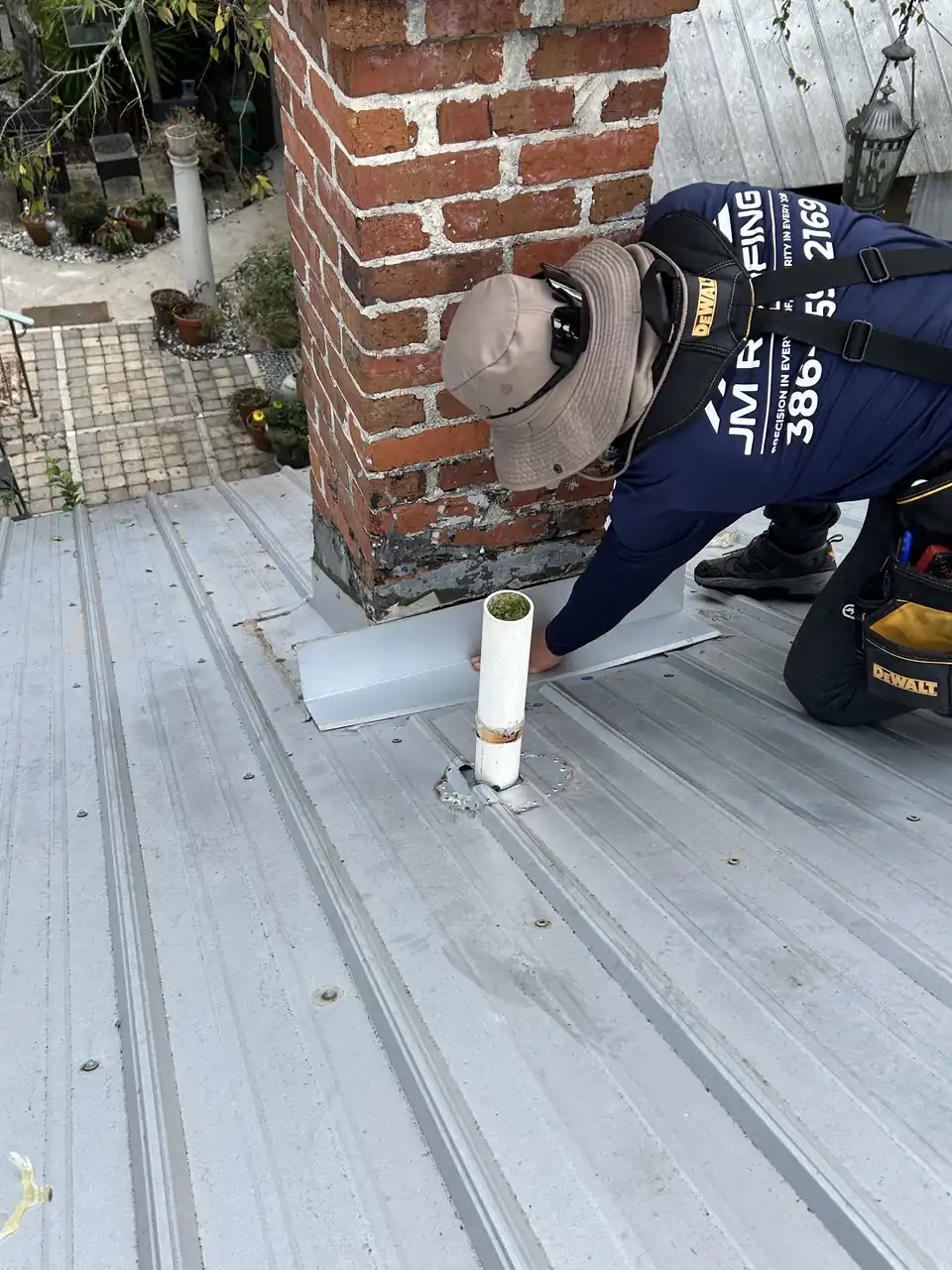
Flashing at walls and chimneys. Caulk fails, stucco cracks at the roofline, counter-flashing pulls out of the mortar. Chimney leaks on older brick houses in Palatka and DeLand are common.
Valleys. Two slopes drain into one channel, so a valley carries more water than any other spot on the roof, and live oak and pine debris dams it up.
Skylights. The curb flashing and the seal around the glass both age, whether the skylight looks fine or not.
Exposed fastener screws on older metal. The rubber washer under every screw head dries out and the screws back out. Sometimes the answer is new fasteners, and sometimes it is time to talk about a standing seam metal roof with no exposed screws in the field of the panel.
Wind-driven rain under lifted shingles. Tropical storm wind breaks the seal strip on asphalt shingles, and the next hard sideways rain gets under the lifted tabs. Our post on signs your roof leaked after a storm covers what to look for.
Condensation and Other Things That Look Like a Roof Leak
Not every wet ceiling is a roof leak, and we will say so. In our humidity, a poorly vented attic or an air conditioning duct that has lost its insulation sweats, and the drip stains the ceiling on cool mornings or when the AC runs hard in July. A metal roof without proper underlayment or ventilation can drip condensation from the underside of the panels. If the fix is a duct wrap or a plumber, that is what you will hear from us.
Temporary Tarps and Dry-In Before the Real Repair
When the source is found but the repair has to wait, for weather, materials or an insurance adjuster, we dry the roof in: a properly fastened tarp that runs over the ridge, or peel-and-stick underlayment over the bad spot. A tarp is a bridge, not a fix, and Florida sun breaks it down in weeks. Storm tarping and the claim that may follow are covered on our storm damage restoration page.
The Leak Repair Itself, Matched to What We Found
The repair follows the diagnosis. A cracked boot gets a new boot, not a bead of caulk over the crack. Failed wall flashing gets pulled and replaced with new step flashing and counter-flashing. A worn shingle valley gets rebuilt with a metal valley and new underlayment. Backed-out screws on a metal roof get larger fasteners with new washers, and a holed or rusted panel gets replaced.
You get a written estimate before the work and photos of the fix after. Juan will also tell you when a leak repair is throwing good money after bad: a shingle roof past its life with three leaks on three slopes is a roof replacement conversation. A roof inspection with a written report is a good next step for a house with a history of leaks, and financing through Regions Bank and EnerBank is available if the repair turns out bigger than expected.
Frequently Asked Questions
A stain that appears or grows on a dry day is often condensation, a plumbing leak, or an air conditioning drain problem rather than a roof leak. Uninsulated ductwork and unvented attics sweat in Florida humidity. We rule these out before recommending roof work.
Yes, though it takes more effort. Wind-driven rain enters where a normal downpour does not, such as under lifted shingles on the windward slope, at ridge vents, or at a wall flashing facing the storm. We follow the trail in the attic, check the windward side closely, and hose test the suspect area from a low angle to imitate sideways rain.
Caulk over a cracked boot or a flashing seam usually buys a few months, then the leak returns, often larger because the caulk trapped water behind it. It also hides the failure from whoever inspects the roof next. If you patch it to get through a weekend, tell us so we can find it and do the permanent fix underneath.
We start in the attic and trace the water trail on the underside of the deck to its highest point. Then we inspect the roof above and upslope of that spot for boots, flashing, valleys, seams and fasteners. If nothing is obvious, we hose test small sections while someone watches inside. Drone photos help on steep or high roofs.
It depends on the roof. A single failed boot or flashing on a roof with years of life left is a straightforward repair. A shingle roof that is brittle and leaking in several places, or a metal roof with hundreds of failing screws, may be better served by replacement. You get both options in writing.
Roof Repair
Roof repair in Palatka and Putnam County FL. Wind-lifted shingles, cracked pipe boots, chimney flashing, backed-out screws on metal roofs.
Learn more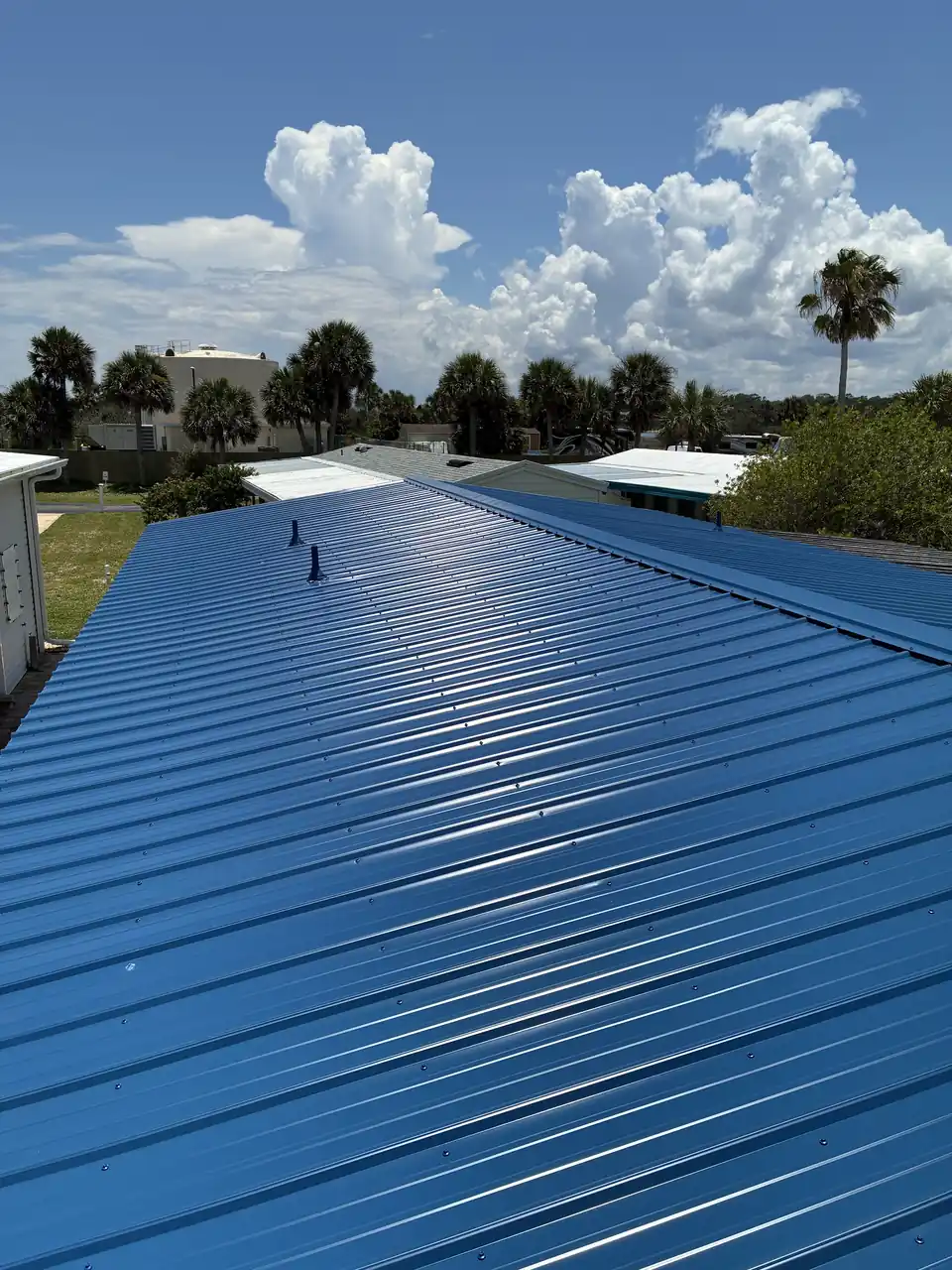
Metal Roofing
Metal roofing in Putnam County and North Florida. Tri County Metals 5V, standing seam and Ultra Rib panels, factory trained installer.
Learn more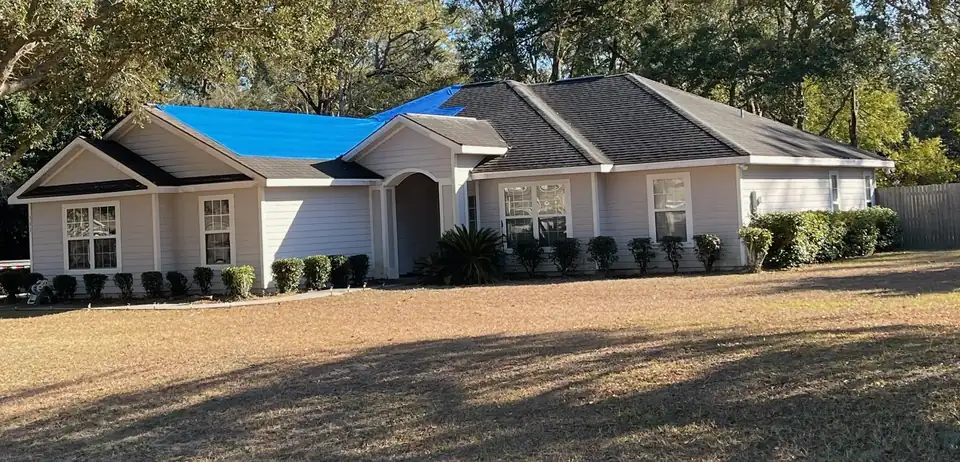
Storm Damage Restoration
Storm damage roof repair in north Florida after hurricanes, wind and hail. Tarping, photo documentation and help with your insurance claim.
Learn moreCall Before the Next Afternoon Storm
A small leak is a small job. A leak that runs through a summer of thunderstorms is a rotten deck, wet insulation and a new ceiling. Call JM Roofing at (386) 559-2169 or send a photo of the stain through the contact page. We serve Pomona Park, Palatka, Crescent City and the towns on our service areas page.