
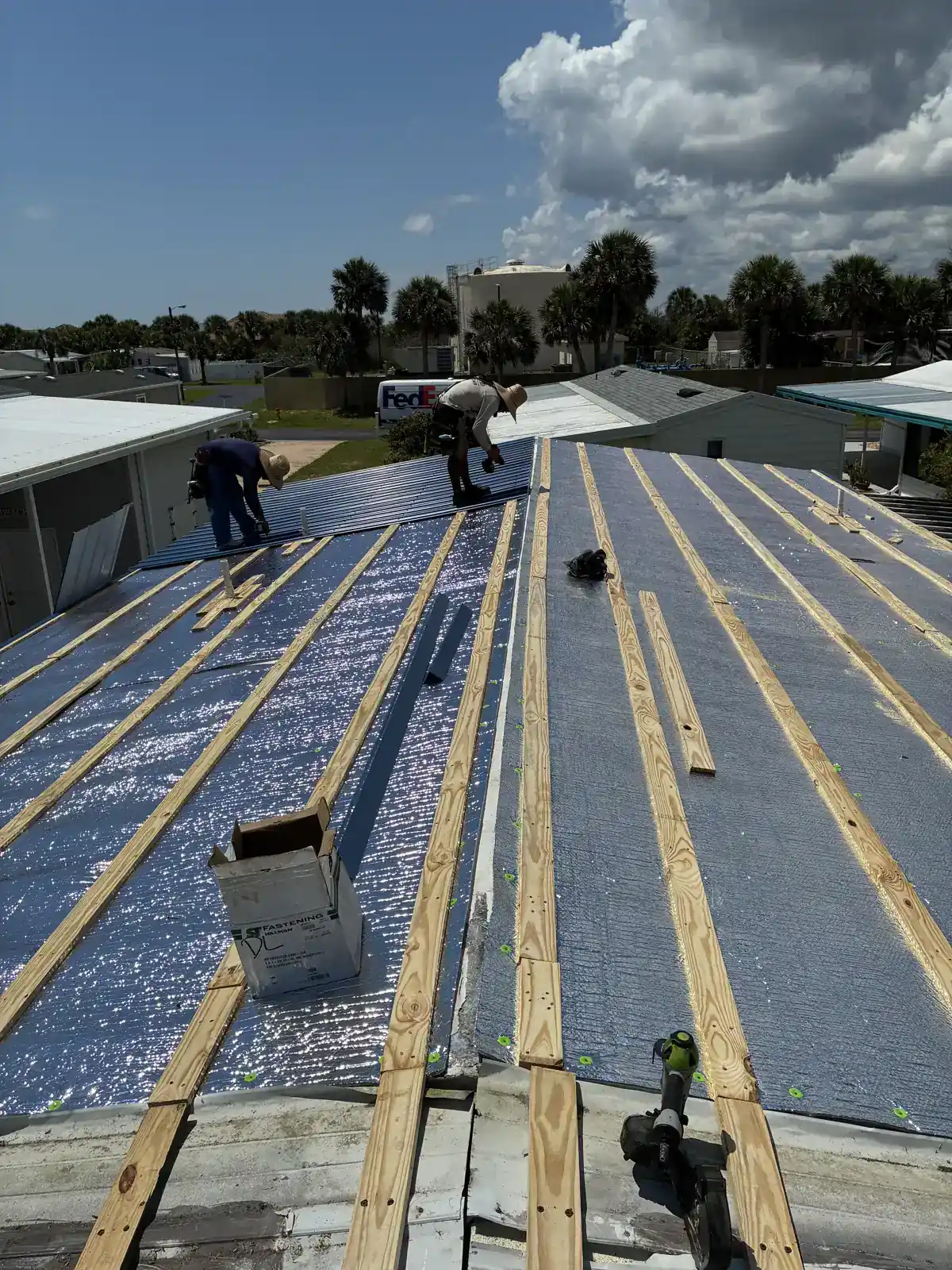
TPO and Single Ply Roofing for Flat and Low-Slope Roofs in Florida
Shingles need pitch and metal needs at least a little, so every flat roof in north Florida needs something else. On the old JM Roofing site this page was called Flat Roof Systems, and that is still the plain description: TPO single ply membrane for the flat and low-slope roofs on small commercial buildings, and for the flat sections of houses, the room addition, the porch roof, the carport, the section over the garage where a 1970s builder ran out of slope.
Shingles need pitch and metal needs at least a little, so every flat roof in north Florida needs something else. On the old JM Roofing site this page was called Flat Roof Systems, and that is still the plain description: TPO single ply membrane for the flat and low-slope roofs on small commercial buildings, and for the flat sections of houses, the room addition, the porch roof, the carport, the section over the garage where a 1970s builder ran out of slope.
JM Roofing LLC installs TPO from Pomona Park across Putnam County and the rest of north-east and north-central Florida.
What a TPO Membrane Is and Where It Belongs
TPO stands for thermoplastic polyolefin. It is a single ply roofing membrane, a sheet of reinforced plastic that comes in wide rolls, usually white, in thicknesses measured in mils. It replaced tar-and-gravel and much of the modified bitumen on small commercial buildings because it goes down faster, weighs less, and reflects the sun.
It belongs on any roof too flat to shed water by pitch alone. That includes the low-slope deck over a strip of shops, the flat wing on a church, the warehouse with internal drains, and on a house, the addition with a quarter inch of fall per foot, the porch roof with a wall on the high side and the carport. Anything below about a 2:12 pitch is membrane territory. Above that, we talk about metal roofing or shingles.
Heat-Welded Seams: Why the Roof Is One Sheet When We Leave
The reason TPO holds up is the seam. Rolls of membrane are laid out with an overlap, and a hot-air welder runs down the overlap, melting the two sheets into each other. When it cools, the seam is not glued or taped; it is one piece of plastic. Flashings at walls, curbs and pipes are welded the same way, so every joint on the roof is fused instead of relying on a bead of sealant that will dry out in three Florida summers.
That is also why the installer's skill matters more than the brand of membrane. Welder temperature, speed and pressure change with the weather, and a cold seam looks fine and peels open in a year. Juan checks welds as they cool, and the crew probes every seam before the roof is called finished.
Mechanically Fastened or Fully Adhered: How the Membrane Goes Down
There are two ways to hold a single ply roof on a building.
Mechanically fastened: the membrane is laid over the insulation, and screws with plates are driven through the sheet into the deck along the seam line, where the next sheet's overlap will cover them. It is the faster and less expensive method, it works well over a wood or steel deck, and it is common on small commercial roofs.
Fully adhered: the membrane is glued to the insulation or a cover board across its whole surface. No fasteners through the sheet, no flutter, a flatter finished look, and better wind uplift performance on a roof with a lot of exposure. It costs more in labor and adhesive and needs dry weather to set, which in a north Florida summer means an early start.
Juan tells you which one the roof should get and why.
Insulation, Tapered Insulation and the Ponding Water Problem
Under the membrane is rigid insulation, usually polyiso board, fastened to the deck. It keeps the building cooler and gives the membrane a smooth, uniform surface.
Then there is the slope. A flat roof is never truly flat, and the low spots hold water. A puddle that stays more than a couple of days after a rain is ponding, and ponding is what kills flat roofs: it stresses the seams, grows algae, breeds mosquitoes, and adds weight to the deck. Tapered insulation fixes it. The boards are cut in wedges that build a slope toward the drains. On a re-roof we map where the water sat, and the tapered layout is designed to move it.
Drains, Scuppers and the Edges Where Flat Roofs Actually Leak
Membrane in the middle of the roof almost never leaks. The edges and the holes do. On every TPO job the details get more of Juan's time than the field.
Internal drains get new clamping rings and a strainer, with the membrane welded to a drain flashing. Scuppers, the openings through a parapet that let water off the roof, are lined and welded in. Overflow scuppers go in where the code wants a second way out if a drain clogs with pine needles, which in Putnam County it will.
Parapet walls and curbs get membrane run up the wall and terminated under a metal cap or a termination bar. HVAC curbs, pipes and vents get pre-formed boots or field-wrapped flashing, welded.
Any one of these done quickly is a leak in the first hard rain. The roof leak repair page describes how we chase water on a flat roof when someone else's edge detail fails.
Why a White Roof Matters Under the Florida Sun
A black flat roof in August is hot enough to soften the asphalt in it. A white TPO membrane reflects most of the sunlight that hits it, so the roof surface runs far cooler, the building under it needs less air conditioning, and the membrane itself is not being cooked every afternoon. We wrote about the same principle for metal in which metal roof color is the most energy efficient in Florida.
Re-Cover or Tear Off the Old Flat Roof
If the old roof is dry, the deck is sound and there is only one existing layer, a new TPO roof can sometimes go over it with a separation layer or new insulation. The Florida Building Code limits how many roof layers a building can carry, and wet insulation has to come out, so the decision starts with a moisture check. Juan probes the old roof, cuts a test square where it looks suspicious, and if the insulation is saturated, it is a tear-off. A roof replacement on a flat roof is a bigger job than a re-cover, and it is the only honest one when the roof underneath is wet.
Walking on It and Keeping It Up
TPO can be walked on, and a service tech will walk on it to reach the air conditioner. Walkway pads welded to the membrane along the path to the HVAC units take that traffic instead of the roof. Beyond that, a flat roof asks for a little attention twice a year: clear the drains and scuppers, sweep off the pine needles and oak leaves, look at the seams and the flashings, check the sealant at the termination bars. Our roof inspections include flat roofs.
We install TPO across our service area, on commercial buildings in Jacksonville, Daytona Beach and Palatka, and on the flat additions and porches of houses across Putnam County. For a house, financing through Regions Bank applies to a flat roof the same way it applies to any other roof we install.
Frequently Asked Questions
It depends more on drainage and installation than on the membrane. A TPO roof with sound welds, tapered insulation that actually drains, and drains that get cleared twice a year holds up well under the Florida sun. One that ponds, or that had a cold seam on day one, fails early. Juan will give you an honest read on an existing flat roof before recommending anything.
Yes. Flat additions, porch roofs, carports and low-slope sections on split-levels are common TPO jobs on houses across Putnam County. The membrane is tied into the shingle or metal roof above it with flashing so the transition does not leak, which is where most flat sections on houses fail.
A rubber roof (EPDM) is a black sheet with seams that are glued or taped. TPO is a white thermoplastic sheet with seams that are heat-welded into one piece. In Florida the white surface and the welded seams both matter: the roof runs cooler, and the seams do not depend on adhesive that softens in the heat.
Yes, in soft-soled shoes, and along the walkway pads if the roof has them. Keep sharp tools, dropped screws and dragged equipment off the membrane, because a puncture is the most common flat roof repair we see. Ask about welded walkway pads along the route the air conditioning tech takes.
It is holding water because the deck sags, the insulation was laid flat, or a drain is clogged, and yes, it matters. Standing water stresses the seams, adds weight, grows algae, and finds any pinhole. If the drains are clear and it still ponds, the fix at re-roof time is tapered insulation that builds a slope toward the drains. We map the low spots before the old roof comes off.
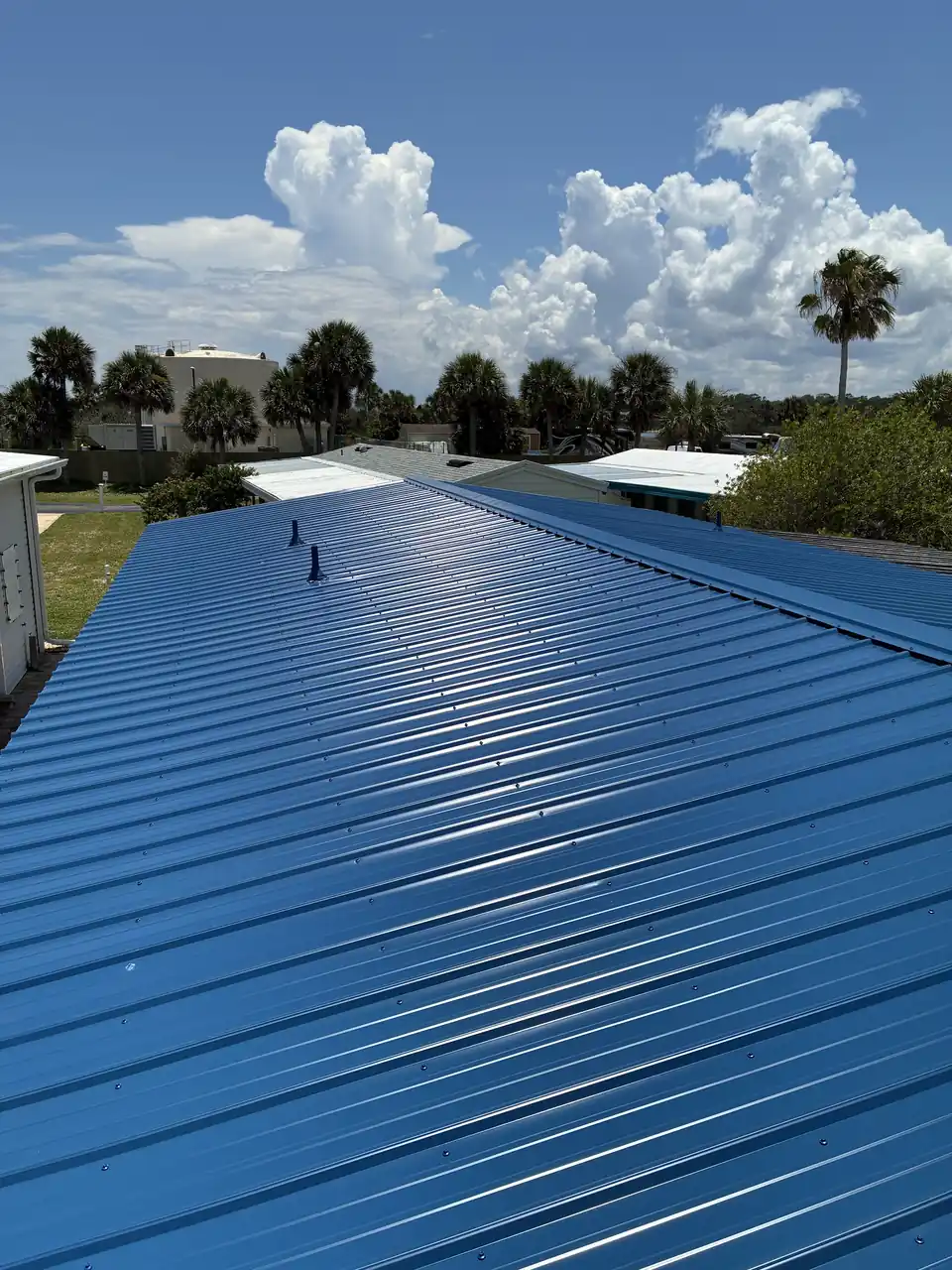
Metal Roofing
Metal roofing in Putnam County and North Florida. Tri County Metals 5V, standing seam and Ultra Rib panels, factory trained installer.
Learn more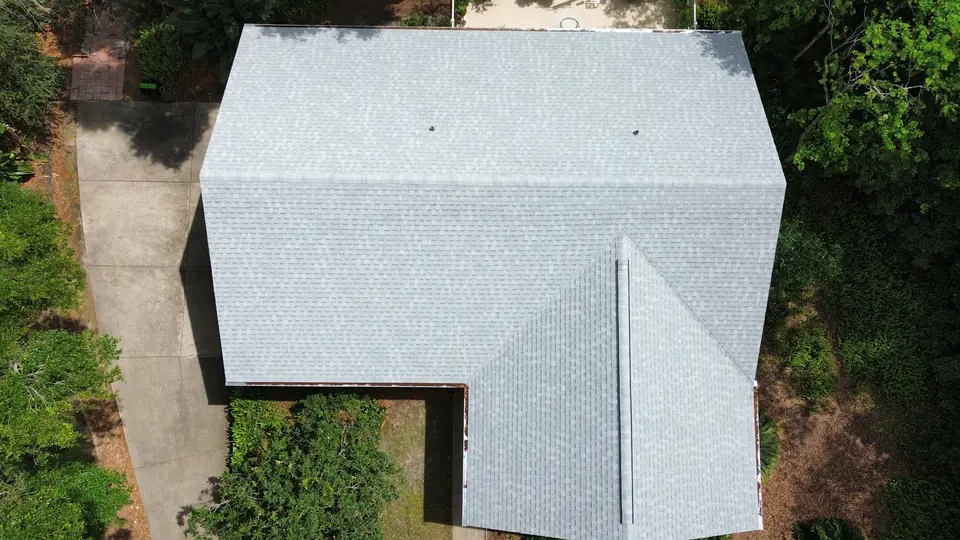
Asphalt Shingle Roofing
Architectural shingle roofs for Putnam County and north Florida, installed to the Florida Building Code. Honest shingle or metal advice.
Learn more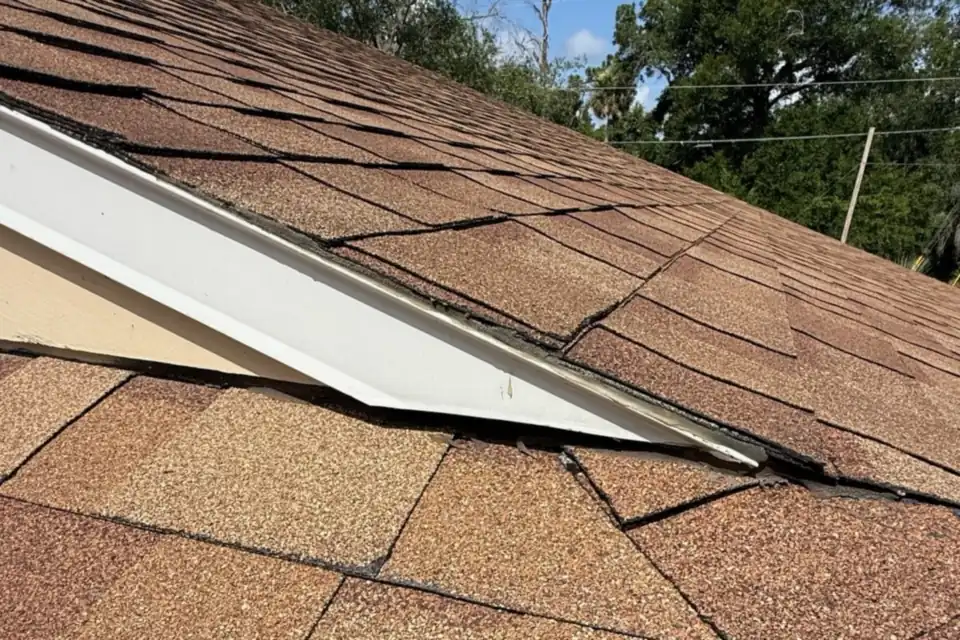
Roof Leak Repair and Detection
Roof leak repair and leak detection across north-east and north-central Florida. Juan finds where the water gets in, not just the stain.
Learn moreAsk About a Flat Roof Estimate
Call Tania at (386) 559-2169 with the address and a description of the roof, or email jmroofingllc24@gmail.com with a photo of the puddle. Juan will get on the roof, check the old layers for moisture, look at the drains, and write up an estimate that spells out the membrane, the fastening method, the insulation and the details.