Commercial Roofing for Small Buildings Across North Florida
Not every commercial roof is a distribution center. Most of the commercial buildings between Palatka and the coast are small: a strip of storefronts on a town street, a church with a fellowship hall, a mechanic's shop, a pole barn full of hay or equipment, a warehouse with two loading doors, a one-story office.
Not every commercial roof is a distribution center. Most of the commercial buildings between Palatka and the coast are small: a strip of storefronts on a town street, a church with a fellowship hall, a mechanic's shop, a pole barn full of hay or equipment, a warehouse with two loading doors, a one-story office.
JM Roofing LLC roofs those buildings. We are a family-owned contractor out of Pomona Park, Juan Medina is on every job, and the same care we give a house goes onto a roof that has a business running under it.
Strip Retail, Churches, Barns and Warehouses: The Commercial Work We Take On
Our commercial work is mostly metal, on buildings where the owner wants a roof that will not be back on the to-do list for a long time.
Strip retail and storefronts. A row of small shops usually shares one long low-slope roof with a parapet or a simple eave, several HVAC units, and a lot of penetrations.
Churches. Steep sanctuary roofs, flat or low-slope wings, steeples, and a congregation that meets on Sunday no matter what.
Agricultural buildings. Barns, pole barns, equipment sheds and packing houses across Putnam, Marion and Columbia counties, most of them framed with wood purlins rather than a solid deck. Exposed fastener panels were made for these.
Shops, warehouses and offices. Metal buildings with aging screw-down roofs, block buildings with a low-slope deck, small office buildings with a shingle or membrane roof that has run out of time.
We also handle roof repair and leak detection on commercial roofs when a full replacement is not called for, and roof inspections when a building is being bought, sold or put under a new policy.
PBR and MS-LOK: The Tri County Metals Panels We Put on Commercial Roofs
We are a factory trained installer for Tri County Metals, a Florida manufacturer with plants in Ocala, DeLand and Jacksonville, so commercial panels are made in-state and picked up close to the job. Two profiles do most of the commercial work.
PBR is the workhorse exposed fastener panel: 26 gauge steel, a deep rib, and a purlin-bearing leg that gives it strength over open framing. Tri County Metals rates it for commercial and agricultural use, and it holds a Florida Product Approval in the FL 36904 family and a Miami-Dade Notice of Acceptance. The screws are the maintenance item: gaskets age in the sun, and every screw gets checked over the life of the roof.
MS-LOK is the mechanically seamed standing seam panel, and Tri County Metals describes it as often the panel of choice for commercial projects. It comes in 1.5 inch and 2 inch seam heights in 24 gauge steel, approved over plywood or steel deck. The panels are clipped to the deck with no exposed fasteners, and after they are laid, a seaming machine rolls down every seam and folds it closed. That folded seam is why MS-LOK goes on long, low-slope commercial roofs: it handles a lower pitch than a snap-together panel and it does not depend on a bead of sealant to keep water out. The standing seam finish is Max Defender, a 70 percent PVDF coating Tri County Metals recommends for hot and humid conditions, backed by Tri County Metals' limited paint and finish warranty.
For gauges, finishes and every panel in the line, see the metal roofing page.
Flat and Low-Slope Commercial Decks Where Metal Is Not the Answer
Some commercial roofs are truly flat, or close to it, with internal drains and no place for a metal panel to shed water. On those we install TPO single ply membrane with heat-welded seams over rigid insulation, with tapered insulation where water has been ponding. Which one a building needs gets settled on the roof, with a level and a look at the drains, not on the phone.
Roofing Over an Open Business Without Shutting It Down
A commercial job is scheduled around the people under it. Before the first panel comes off, we walk the building with the owner or manager and settle the details: where the trailer and the material go, which parking spaces are blocked and when, which entrance stays open, what hours the loud work happens, and what has to be covered inside. A restaurant does not want tear-off during the lunch rush. A church wants the sanctuary side finished and cleaned before Sunday.
Metal panels help here. A metal re-roof is sectioned: one run is opened, dried in and covered before the next is touched, so a storm at 3 p.m. finds a closed roof. Debris comes down in a chute or by hand, never over a storefront. The ground crew keeps sidewalks swept and runs a magnet over the parking lot at the end of every day, because a customer with a screw in a tire is the owner's problem and therefore ours.
Two Commercial Metal Roofs From Our Own Jobs
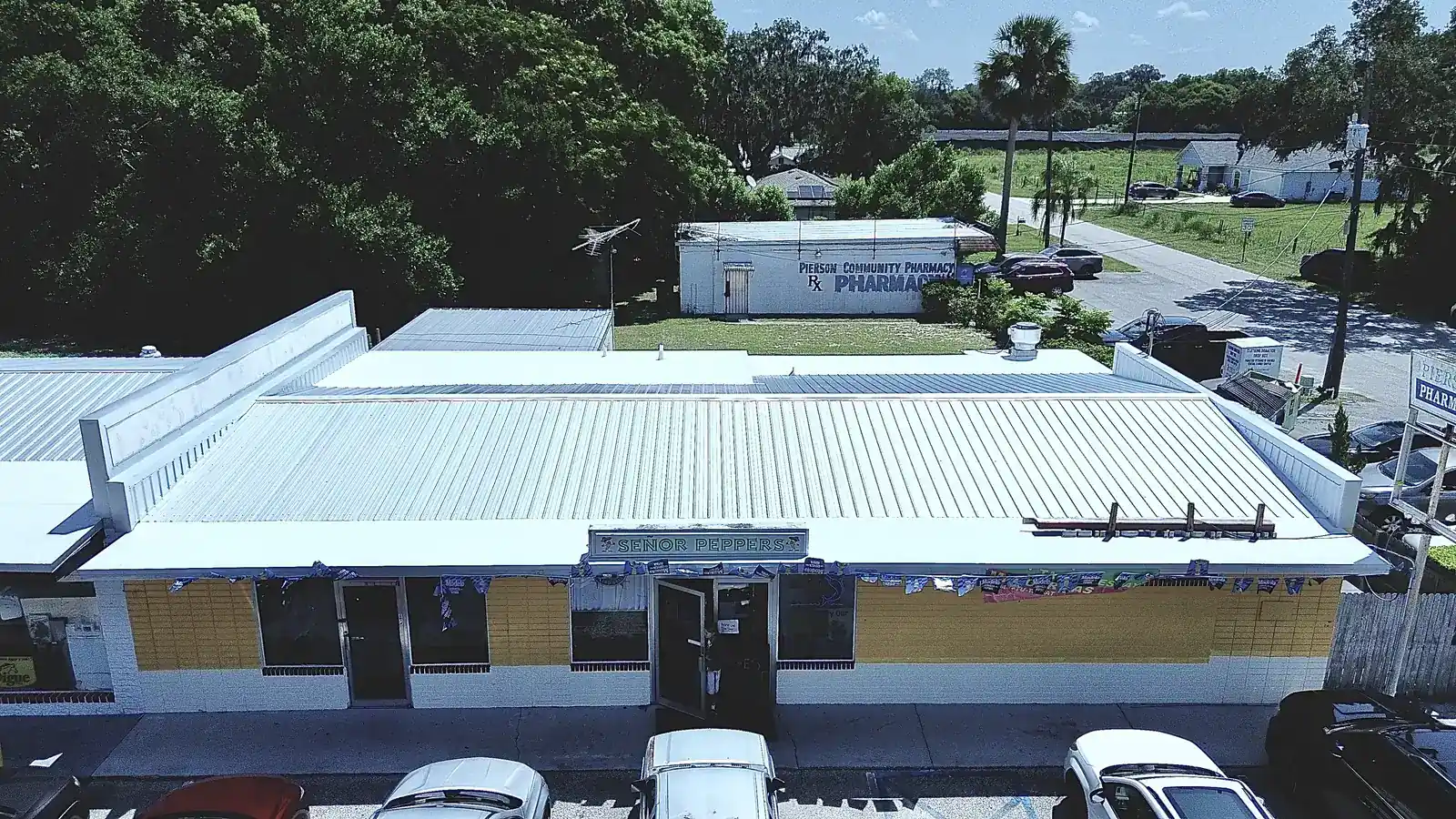
Two recent projects show the range. The first is a strip of small commercial buildings on a town street with parking out front, re-roofed in new Galvalume-finish metal, the whole row done as one job so the roofline matches end to end. The second is a long low-slope commercial building where the old panels came off down to the purlins and underlayment, then the roof went back on in bright blue standing seam, every seam running straight from one end to the other under a Florida summer sky. Both are in the gallery on the our work page.
Storm Damage and Insurance Claims on a Commercial Building
A commercial roof takes the same hurricanes a house does, with more square footage to catch the wind and more rooftop equipment to tear loose. After a storm, we get on the roof, photograph the damage, tarp or temporarily seal what is open, and write a scope. If the owner files a claim, we meet the adjuster, walk the roof with them and explain the scope. We do not promise a claim outcome and we do not adjust claims; we document and we explain. Florida law sets a deadline for notifying a carrier of a new claim, so do not sit on it. The storm damage restoration page covers the process, and the post on what to expect from a roof insurance claim in Florida covers the mechanics.
A building owner also has a bigger reason than a homeowner to re-roof before the storm: a metal roof fastened to current code with Florida Product Approved panels is the kind of roof carriers ask about at renewal. Our financing page lays out the plans we offer through Regions Bank; they were written for homeowners, so ask Tania whether one fits a commercial project.
We take commercial work across north-east and north-central Florida, from Jacksonville down to Daytona Beach and west to Ocala and Lake City.
Frequently Asked Questions
Yes, and that is how most commercial jobs go. We agree on the sequence with you before we start: which section first, which entrance and parking stay clear, when the noisy work happens, and what gets covered inside. Metal panels come off and go back on in sections, so the building is dried in every evening.
It depends on the pitch, the framing and the budget. PBR from Tri County Metals is an exposed fastener panel that is strong over open purlins and costs less, so it suits barns, shops and warehouses. MS-LOK is a mechanically seamed standing seam with no exposed screws, which handles a lower slope and needs less upkeep, so it suits storefronts, churches and offices. Juan lays out both when both would work.
Sometimes. Over an existing screw-down metal roof on purlins, or over one layer of shingles on a sound deck, a metal re-cover is often allowed with new underlayment. Over wet insulation, a rotted deck or a second layer, the old roof has to come off. Juan checks the deck and the existing layers first, and the county's rules decide the rest.
Yes. Pole barns, equipment sheds, hay barns and packing houses in Putnam, Marion and Columbia counties are a regular part of our work. Tri County Metals' exposed fastener panels hold Florida Product Approvals for installation over wood purlins, which is how most of those buildings are framed. A barn roof is usually a quick job, and it goes on the schedule between bigger ones.
It depends on the size of the roof, the pitch, how many HVAC curbs and penetrations there are, and the weather. The written estimate gives you a schedule, and because the work is sectioned, the building is never open to the sky overnight.
Roof Repair
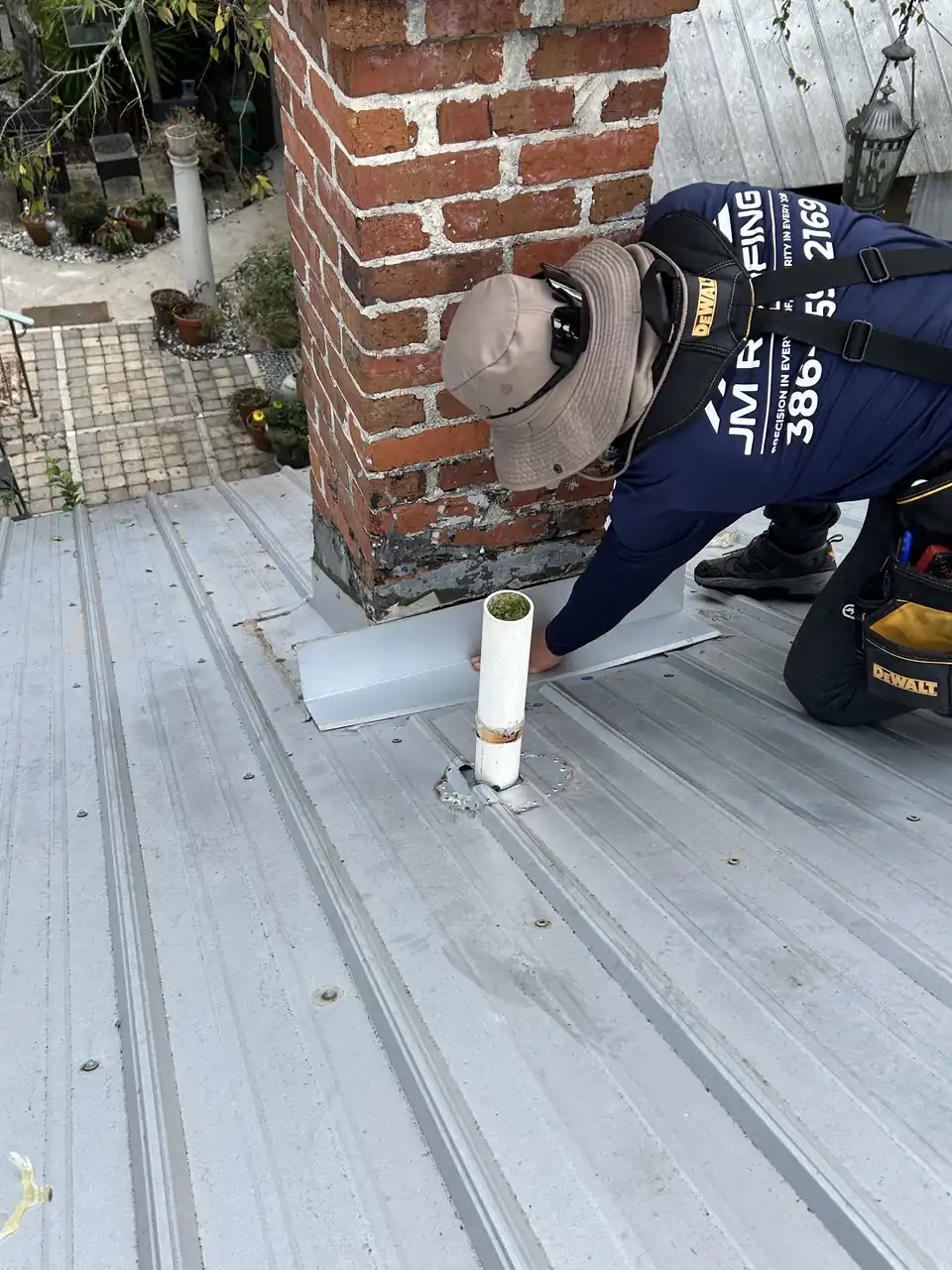
Roof repair in Palatka and Putnam County FL. Wind-lifted shingles, cracked pipe boots, chimney flashing, backed-out screws on metal roofs.
Learn more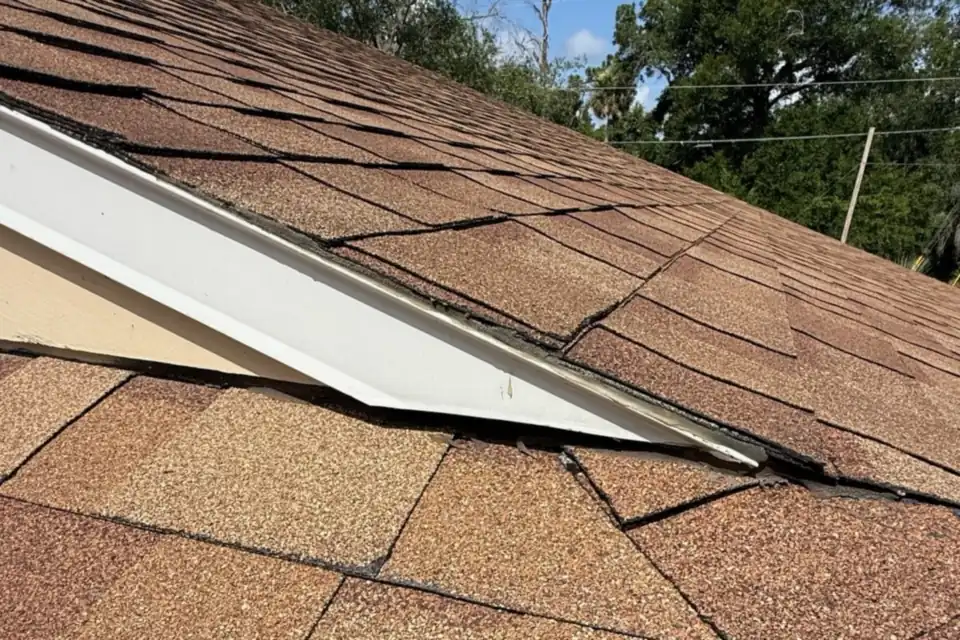
Roof Leak Repair and Detection
Roof leak repair and leak detection across north-east and north-central Florida. Juan finds where the water gets in, not just the stain.
Learn more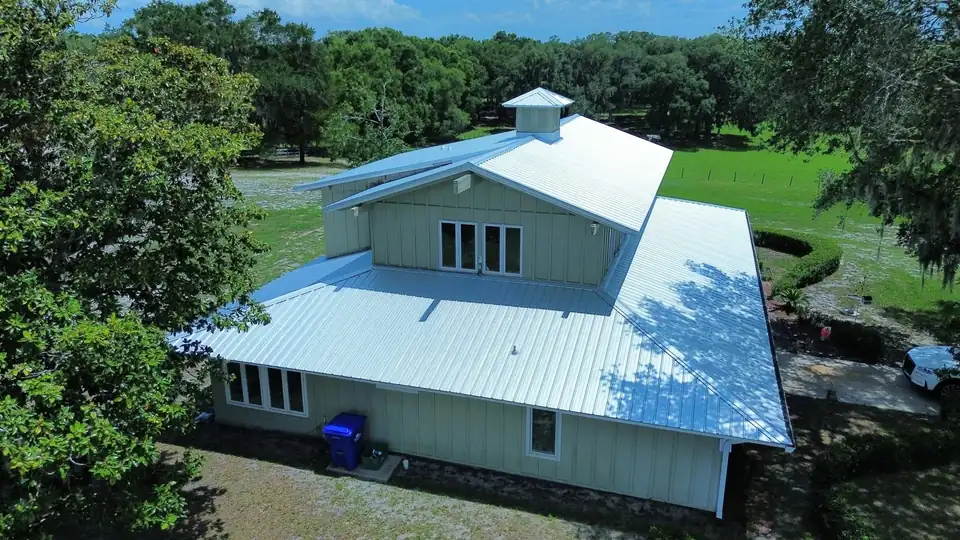
Roof Inspections
Roof inspections in Palatka, Putnam County and north Florida. Pre-purchase, insurance, storm and yearly checks with a written photo report.
Learn moreSchedule a Commercial Roof Walk-Through
Call (386) 559-2169 and tell Tania about the building. Juan will meet you on site, walk the roof, and put together a written scope with the panel, the gauge, the finish and the schedule spelled out. Email jmroofingllc24@gmail.com if you would rather send the address and a few photos first.